

Choose the right self assessment software for individuals
 Team Nomi
7 minutes read
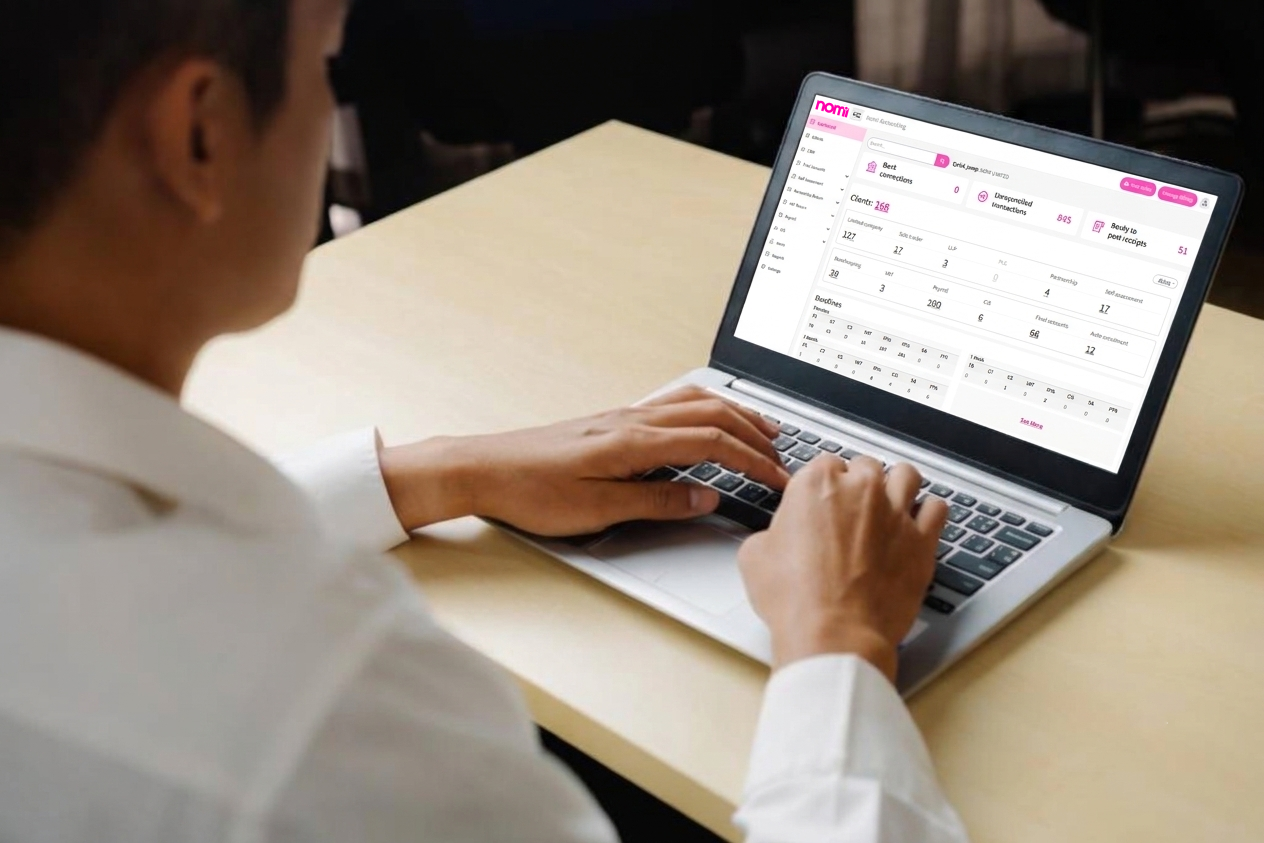
Choosing the right self assessment software can make filing your UK tax return faster, easier, and less stressful. As tax reporting becomes increasingly digital, choosing software that meets your current and future needs can help you avoid unnecessary admin.
HMRC’s online service may be suitable for individuals with straightforward tax affairs. However, self-employed individuals, landlords, business partners, and people with multiple income sources may benefit from dedicated tax software to manage income, expenses, calculations, forms, and submissions.
Making Tax Digital (MTD) for Income Tax is also changing how many people manage their tax. From 6 April 2026, sole traders and landlords with qualifying income above £50,000 in the 2024-25 tax year must use MTD-compatible software to keep digital records and submit quarterly updates to HMRC.
Best Self Assessment Software for individuals
Self Assessment software helps individuals and accountants prepare and submit tax returns to HMRC. It can make the process easier by keeping tax information organised and reducing manual work.
Nomi’s Self Assessment software is designed for accountants and bookkeepers to manage individual and partnership tax returns in one place. It helps professionals organise client information, prepare tax returns and manage the filing process efficiently.
For accountants managing multiple clients, having Self Assessment work in one system can make it easier to manage returns from preparation through to submission.
Who needs Self Assessment software?
Not everyone needs dedicated commercial software. Your requirements depend on your income and tax situation.
You may benefit from Self Assessment software if you are:
-
- A sole trader
- A landlord
- A freelancer or contractor
- A partner in a partnership
- An individual with several income sources
- Someone with property income
- An individual receiving foreign income
- A taxpayer with more complex tax affairs
- An accountant or bookkeeper managing returns for clients
If your tax affairs are simple, you may be able to complete your return directly through HMRC’s online service. However, software can become more useful when you need to manage multiple income sources, expenses, allowances, or supplementary pages.
What should you look for in the Self Assessment software?
The right Self Assessment software depends on your circumstances. Before choosing a solution, consider the following features.
1. HMRC compatibility
Your software should support the tax returns and reporting requirements you need.
These are MTD for Income Tax requirements. The software must support digital records, quarterly updates and submission of the tax return.
2. Easy income and expense recording
Good software should make it simple to enter and organise income and allowable expenses.
For self-employed individuals, this can reduce the need to maintain separate spreadsheets throughout the year.
3. Support for different income sources
Some individuals receive income from more than one source. For example, you could have:
-
- Self-employment income
- Property rental income
- Employment income
- Savings income
- Dividend income
- Pension income
- Foreign income
Choose software that supports the types of income you need to report.
4. Tax calculations
Manual calculations can increase the risk of errors. Software can calculate tax based on the information entered and apply relevant rules.
This can make it easier to understand your potential tax liability before submitting the return.
5. HMRC filing
One of the most useful features is the ability to submit the completed return online.
Before choosing software, check that it supports the relevant Self Assessment forms and supplementary pages for your circumstances.
6. MTD for Income Tax support
MTD is an increasingly important consideration for sole traders and landlords.
The current timetable requires individuals with qualifying income above £50,000 in the 2024-25 tax year to use MTD for Income Tax from 6 April 2026. The threshold falls to more than £30,000 in the 2025-26 tax year from 6 April 2027 and more than £20,000 in the 2026-27 tax year from 6 April 2028.
Choosing software that can support digital records and MTD reporting can therefore help you prepare for future requirements.
7. Security and cloud access
Tax information is sensitive. Look for software with appropriate security measures and controlled access.
Cloud-based software can also allow you or your accountant to access information from different locations without relying on files stored on one computer.
8. Clear workflow
Tax filing involves more than completing one form. You need to collect information, check figures, calculate tax, review the return, and submit it before the deadline.
A clear workflow can help reduce missed information and make the process easier to manage.
Nomi’s Self Assessment Software
Nomi’s Self Assessment software is designed for accountants and bookkeepers who manage tax returns for individual and partnership clients. It brings Self Assessment work into a structured workflow, helping practices manage tax return preparation, tasks, and submissions more efficiently.
Nomi also continues to improve its Self Assessment features to support changing tax requirements and make day-to-day tax work easier.
Latest Nomi Self Assessment updates
Nomi’s latest product updates include improvements to both MTD for Income Tax and Self Assessment workflows.
Flexible MTD ITSA reporting periods
Accountants can now choose between calendar and standard reporting periods when setting up a client for their first MTD for Income Tax submission.
Once the first submission is made, the reporting period is locked to meet HMRC requirements. This gives accountants more flexibility during setup while helping maintain compliance.
Improved Self Assessment checklist
Nomi has also redesigned its Self Assessment checklist to provide a clearer and more organised workflow. Accountants can see outstanding tasks more easily, helping them avoid missed actions and complete tax returns more efficiently.
These updates can be particularly useful for practices managing a large number of Self Assessment clients. Instead of relying on separate notes or manual task lists, accountants can use a structured workflow to keep track of the work that needs to be completed.
Why accountants choose Nomi
With Nomi, accountants can:
-
- Prepare Self Assessment tax returns
- Manage individual and partnership tax work
- Organise client tax information
- Track outstanding Self Assessment tasks
- Set up MTD for Income Tax reporting periods
- Manage tax return workflows in one place
- Submit tax returns to HMRC
- Keep client work organised throughout the tax year
For individuals, this means their accountant can manage their Self Assessment work through a dedicated system. For accounting practices, it provides a more organised way to handle tax returns while adapting to new MTD for Income Tax requirements.
Frequently asked questions
- Can individuals use Nomi Self Assessment software themselves?
Ans: Nomi’s Self Assessment software is designed for accountants and bookkeepers rather than individuals filing their own tax returns. Individuals can benefit when their accountant uses Nomi to manage and submit their Self Assessment return.
- What types of Self Assessment returns can Nomi help accountants manage?
Ans: Nomi helps accountants manage individual and partnership tax returns. This allows practices to handle different Self Assessment requirements through a structured tax workflow.
- Can Nomi help accountants manage multiple Self Assessment clients?
Ans: Yes. Nomi is designed for accounting practices managing multiple clients. Accountants can organise client information, track outstanding tasks and manage Self Assessment work from one system.
- Can Self Assessment software help with tax deadlines?
Ans: Self Assessment software can help organise tax work and track important tasks, making it easier to review outstanding work before filing deadlines. However, taxpayers remain responsible for ensuring their returns and payments are completed on time.
- Can Self Assessment software reduce errors in a tax return?
Ans: Software can reduce the risk of common manual errors by organising financial information, performing calculations and guiding users through the required information.
Want to find out more?
Book a free 30-day trial and see how our accounting software can help you manage staff, increase profitability and take your practice to the next level.

Key skills every accountant needs in 2026
Accountants need more than technical accounting knowledge to succeed. Analytical thinking, attention to detail, communication,...
Read More
Cloud-Based Accounting Software for Bookkeepers and Accountants
Managing multiple clients, payroll tasks, tax submissions, and compliance requirements manually can be time-consuming for...
Read More
Last-minute tips for Self Assessment tax return filing
Running out of time to file your Self Assessment tax return? The best tips for...
Read More