Can AI replace accountants in the UK? What businesses need to know
 Team Nomi
7 minutes read
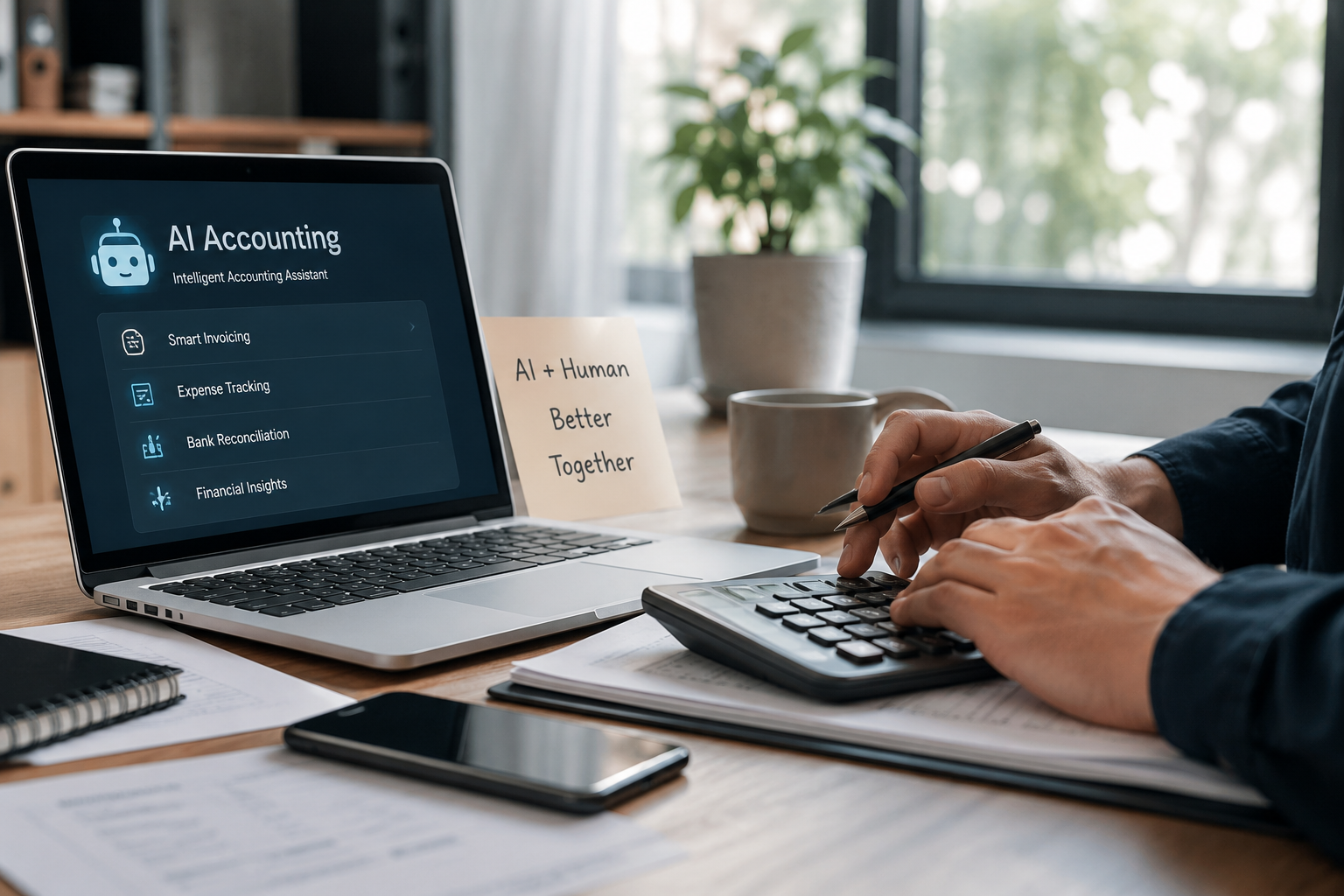
No, AI is unlikely to replace accountants completely in the UK. While Artificial Intelligence (AI) can automate tasks such as bookkeeping, expense tracking, and financial reporting, it cannot replace human judgment, tax expertise, or business advice.
AI is changing the way businesses manage finances, helping accountants work faster and improve accuracy. Rather than replacing accountants, it is allowing them to spend more time on tax planning, compliance, and strategic financial decisions.
In this guide, we explore how AI is shaping accounting in the UK, what it can automate, and why human expertise still matters.
What is AI in accounting?
AI in accounting refers to technology that can analyse financial information, automate manual processes, and improve decision-making using data.
Unlike traditional software that follows fixed rules, AI tools can recognise patterns, learn from information, and complete tasks with minimal input.
Many UK businesses are already using AI-powered accounting systems for:
-
- Bookkeeping automation
- Invoice processing
- Receipt scanning
- Expense categorisation
- Cash flow forecasting
- Fraud detection
- Payroll support
- Financial reporting
Cloud accounting platforms now make it easier for businesses to access financial information in real time. This can improve efficiency and reduce manual admin work.
However, AI works best when guided by professionals who understand financial rules and business goals.
Will AI replace accountants?
The question “Will AI replace accountants?” has become more common as automation continues to grow.
Traditionally, accountants spent large amounts of time on manual data entry, reconciliations, and preparing reports. Today, many of these tasks can be completed in minutes using software.
Businesses are seeing tools that can:
-
- Match transactions automatically
- Spot unusual spending patterns
- Generate reports instantly
- Predict future cash flow
- Identify bookkeeping mistakes
Because of these developments, some people believe accounting jobs could disappear.
But accounting is not only about numbers. Businesses rely on accountants for financial understanding, tax planning, risk management, and guidance during important decisions.
What AI can do better than humans in accounting
AI is particularly useful for repetitive and data-heavy work.
Faster data processing
AI can analyse large amounts of financial information far faster than a person. Tasks that once took hours can now be completed in minutes.
Improved accuracy
Manual bookkeeping mistakes can happen, especially with high transaction volumes. AI systems can reduce errors through automation and consistency.
Real-Time financial insights
Instead of waiting until the month-end reports, businesses can access up-to-date financial information instantly.
Pattern recognition
AI can identify unusual transactions or trends that may signal fraud, overspending, or cash flow problems.
For businesses, this means quicker reporting and better visibility over finances.
What AI cannot replace in accounting
Although AI is improving rapidly, there are several areas where accountants remain essential.
Professional judgement
Accounting decisions often depend on context. Two businesses may face the same financial issue, but need completely different advice.
An accountant understands business goals, industry pressures, and long-term financial impact. AI cannot fully replicate this level of judgment.
Tax planning and compliance
UK tax rules regularly change. Businesses often need support with:
-
- Corporation tax planning
- VAT compliance
- Capital allowances
- Payroll taxes
- Self-assessment obligations
AI can process information, but interpreting tax legislation and applying it correctly still requires expertise.
Business strategy
Many accountants now act as advisers rather than number processors.
They help businesses:
-
- Improve profitability
- Reduce unnecessary spending
- Plan for growth
- Manage financial risk
- Make investment decisions
This level of strategic support is difficult to automate.
Human relationships
Business owners often want reassurance, explanations, and conversations around financial decisions.
Whether discussing tax concerns or business growth, trust still matters. AI cannot replace relationships built through experience and communication.
Will accounting be replaced by AI?
The accounting profession is changing, but not disappearing.
If anything, accounting is moving away from manual administration and towards higher-value advisory work.
Instead of spending hours entering receipts or reconciling accounts, accountants are increasingly focusing on:
-
-
- Business forecasting
- Tax planning
- Financial consultancy
- Compliance reviews
- Profit improvement strategies
-
This means the question may not be “will accounting be replaced by AI”, but rather how accounting will change because of AI.
Will AI take over accounting jobs?
AI is likely to reduce some repetitive accounting roles, particularly tasks based mainly on data entry.
However, new opportunities are also emerging.
As technology develops, accountants may need stronger skills in:
-
- Financial analysis
- Technology systems
- Advisory services
- Data interpretation
- Business consulting
Rather than removing jobs completely, AI is likely to change the type of work accountants do.
Professionals who understand both accounting and technology may become even more valuable.
How accountants in the UK are already using AI
Many UK firms are already using AI to improve efficiency and client service.
Examples include:
-
- Automated Bookkeeping: Transactions are categorised automatically, reducing admin time.
- Smart Invoice Processing: Invoices can be scanned and entered into systems with minimal manual work.
- Cash Flow Forecasting: AI tools can predict future income and spending patterns.
- Fraud Detection: Unusual transactions can be flagged automatically for review.
- Client Reporting: Reports can be generated faster, allowing accountants to focus more on advice.
With digital transformation and Making Tax Digital (MTD) continuing across the UK, technology is becoming increasingly important.
Risks of relying too much on AI in accounting
While AI offers many benefits, there are also risks businesses should consider.
Incorrect Data Input
AI systems depend on accurate information. Wrong entries can lead to inaccurate results.
Lack of Context
Software cannot always understand unusual business situations or one-off events.
Compliance Risks
Tax laws change regularly, and relying only on software could increase compliance risks.
Cyber Security Concerns
Financial systems contain sensitive data, meaning businesses must take security seriously.
This is why many businesses prefer combining accounting software with professional support.
Can AI replace accountants for small businesses?
For small businesses, AI can reduce admin and improve efficiency.
Software may help with:
-
- Invoicing
- Expense tracking
- Payroll processing
- Bookkeeping
- Basic reporting
However, many businesses still need an accountant for:
-
- Tax returns
- HMRC compliance
- VAT advice
- Business planning
- Financial guidance
For growing businesses, having both technology and expert support often provides the strongest results.
What does the future of accounting look like?
The future of accounting is likely to involve collaboration between humans and technology.
AI will continue to automate routine work, giving accountants more time to focus on advisory services and problem-solving.
Businesses are increasingly looking for accountants who can explain financial data clearly and help improve performance.
In the years ahead, accountants who embrace technology are likely to remain in strong demand.
So, will accountants be replaced by AI? Probably not. But accountants who adapt to AI tools may have an advantage over those who do not.
Conclusion
AI is transforming accounting, but it is not replacing accountants altogether. While software can automate routine work, businesses still value expertise, advice, and professional judgement.
Rather than asking “Can AI replace accountants?”, businesses may benefit more from asking how AI and accountants can work together to improve financial management.
Note: This blog provides general information about AI and its impact on the accounting profession. It is not intended as professional advice. You should consult qualified accounting professionals for specific guidance on your circumstances.
Frequently asked questions
No. AI can automate repetitive tasks, but accountants are still needed for judgment, tax planning, compliance, and business advice.
AI is changing the profession, but it is unlikely to replace accountants entirely. It is more likely to support accountants and improve efficiency.
AI may automate bookkeeping and reporting, but businesses still need professional expertise for financial decisions and tax matters.
Accounting is expected to evolve rather than disappear. The focus is moving towards advisory and strategic support.
Yes. Accounting software can save time, but accountants help businesses remain compliant and make informed financial decisions.
Want to find out more?
Book a free 30-day trial and see how our accounting software can help you manage staff, increase profitability and take your practice to the next level.

Month-end close checklist: How Automation cuts hours for UK SMEs
Month-end close can take days when finance teams have to chase invoices, enter transactions, reconcile...
Read More

How to Apply for VAT Exemption in the UK
To apply for VAT exemption in the UK, your business must meet HMRC’s conditions and...
Read More
What accountants should actually look for in practice management software
As an accounting practice grows, managing the work around accounting can become as challenging as...
Read More
Tax Practice Management Software: Features & Benefits
Practice management software helps accounting firms manage clients, tasks, deadlines, documents and daily workflows in...
Read More