UK Tax Changes 2026/27: Key updates
 Team Nomi
8 minutes read

The new tax year brings several UK tax changes affecting individuals, landlords, business owners, investors and employers. Here are the key changes for 2026/27.
The 2026/27 tax year started on 6 April 2026 and runs until 5 April 2027. Some of the biggest changes include higher dividend tax rates, changes to inheritance tax reliefs, new Making Tax Digital requirements and changes to Capital Gains Tax reliefs.
This blog explains the main UK tax changes 2026/27 changes that businesses and individuals should know about.
Tax changes in 2026/27
Here are some of the main changes taking effect during the 2026/27 tax year:
| Tax area | Key change |
| Income Tax | Personal Allowance remains at £12,570 |
| Income Tax bands | Main thresholds remain frozen |
| Dividend Tax | Basic and higher dividend rates increase |
| Capital Gains Tax | Business Asset Disposal Relief rate increases to 18% |
| Inheritance Tax | New £2.5 million allowance for qualifying business and agricultural property |
| Making Tax Digital | Mandatory from April 2026 for qualifying income above £50,000 |
| Homeworking relief | Employee tax relief for unreimbursed homeworking costs ends |
| Carried interest | Moves into the Income Tax framework |
| Air Passenger Duty | Rates increase from 1 April 2026 |
| E-invoicing | Peppol announced as the core interoperability network for the future UK system |
Income Tax Changes 2026/27
One of the most important areas to understand is Income Tax.
For England, Wales and Northern Ireland, the standard Personal Allowance remains £12,570. This means most people can receive up to £12,570 of income before paying Income Tax.
The main Income Tax rates also remain:
-
- 20% basic rate
- 40% higher rate
- 45% additional rate
The tax bands have been frozen, meaning the thresholds have not increased with inflation.
For 2026/27, the main tax brackets 2026 are:
| Income Tax band | Taxable income | Rate |
| Personal Allowance | Up to £12,570 | 0% |
| Basic rate | £12,571 to £50,270 | 20% |
| Higher rate | £50,271 to £125,140 | 40% |
| Additional rate | Over £125,140 | 45% |
Your Personal Allowance is reduced by £1 for every £2 of adjusted net income above £100,000. It is fully withdrawn once income reaches £125,140.
New Income Tax Rules 2026: What has changed?
The main Income Tax rates have stayed the same for 2026/27. However, some important tax rules have changed.
For example, some sole traders and landlords must now use Making Tax Digital, keep digital records and send quarterly updates to HMRC.
There are also changes to dividend tax, business asset sales, homeworking tax relief and carried interest.
So, when planning your 2026/27 tax, it is important to check more than just the Income Tax rates and bands.
Dividend Tax Changes 2026/27
Dividend tax rates have increased from 6 April 2026.
The dividend allowance is £500. Dividends above this allowance may be taxable depending on your Income Tax band.
For 2026/27, the dividend tax rates are:
| Tax band | Dividend tax rate |
| Basic rate | 10.75% |
| Higher rate | 35.75% |
| Additional rate | 39.35% |
The basic dividend rate increased from 8.75% to 10.75%, while the higher rate increased from 33.75% to 35.75%.
The additional dividend rate remains at 39.35%.
This change is particularly relevant to company directors, shareholders and investors who receive dividend income.
If you receive both salary and dividends from a limited company, you should consider the combined effect of your income, tax bands and dividend allowance.
Capital Gains Tax changes
Capital Gains Tax (CGT) is a tax you may pay when you sell or dispose of an asset that has increased in value.
For 2026/27, the main CGT rates for individuals are 18% and 24%. The rate depends on your taxable income and the type of gain.
The Annual Exempt Amount remains:
-
- £3,000 for individuals
- £1,500 for most trustees
You generally only pay CGT when your total taxable gains are above your available Annual Exempt Amount.
Business Asset Disposal Relief
Business Asset Disposal Relief (BADR) can reduce the CGT rate on qualifying business disposals.
From 6 April 2026, the CGT rate for gains qualifying for BADR increased from 14% to 18%. The lifetime limit for qualifying gains remains £1 million.
This change is important for business owners who are planning to sell or dispose of a qualifying business or business assets. Before making a disposal, check whether you meet the BADR conditions and how the 18% rate could affect your tax bill.
Making Tax Digital for income tax
Making Tax Digital (MTD) for Income Tax is one of the biggest changes affecting sole traders and landlords.
From 6 April 2026, MTD for Income Tax applies to individuals whose qualifying income is more than £50,000, based on their 2024/25 tax return.
Those affected generally need to:
-
- Keep digital records
- Use compatible software
- Send quarterly updates to HMRC
- Submit an end-of-period statement
- Complete their final tax return and pay any tax due
The MTD threshold will reduce further in future years:
| Tax year | Qualifying income | MTD start date |
| 2024/25 | More than £50,000 | 6 April 2026 |
| 2025/26 | More than £30,000 | 6 April 2027 |
| 2026/27 | More than £20,000 | 6 April 2028 |
This staged approach means more sole traders and landlords will need to prepare for digital tax reporting over the next few years.
Inheritance Tax Changes for farms and businesses
From 6 April 2026, changes to Agricultural Property Relief (APR) and Business Property Relief (BPR) apply.
-
- 100% relief applies to the first £2.5 million of qualifying agricultural and business property.
- Property above £2.5 million generally receives 50% relief, giving an effective IHT rate of up to 20%.
- Unused allowance may be transferable to a surviving spouse or civil partner, subject to the rules.
These changes are important for farmers, business owners, estates and trusts holding qualifying assets.
Corporation Tax Changes
There is no major change to the main Corporation Tax rate for 2026/27.
The main Corporation Tax rate remains 25%, while the small profits rate remains 19% for companies within the relevant profit limits.
However, there are other Corporation Tax-related changes businesses should monitor.
From April 2027, certain research and development and other expenditure credits will no longer count when determining whether a company falls within the Corporation Tax Quarterly Instalment Payments regime.
This should prevent some companies from entering the quarterly payment regime solely because they receive these credits.
VAT and Tax administration changes
The government is modernising tax administration, including plans to digitise the VAT option to the tax process. New digital channels are expected to replace paper notifications and revocations by the end of 2026.
HMRC is also exploring how digital VAT data could support better compliance.
How the Tax Changes could affect you
The impact of the 2026/27 changes depends on your income and circumstances.
If you are an employee
You should check your tax code, salary, benefits and any expenses you claim. If you work from home, remember that the employee tax relief for unreimbursed homeworking costs has ended.
If you are a company director
The higher dividend tax rates may affect how much tax you pay on dividends. It is worth reviewing your salary and dividend arrangements with appropriate professional advice.
If you are self-employed
Check whether you fall within the MTD for Income Tax requirements. If your qualifying income is above £50,000, digital records and quarterly updates may now be required.
If you are a landlord
Review your qualifying income and check whether MTD applies to you. Landlords should also keep accurate digital records of rental income and allowable expenses where required.
If you own a business or farm
The changes to Business Property Relief and Agricultural Property Relief could affect future Inheritance Tax planning.
If you plan to sell a business
The increase in the Business Asset Disposal Relief rate to 18% could affect the amount of CGT payable when you dispose of qualifying business assets.
How to prepare for the 2026/27 Tax Year
You can take a few simple steps to stay prepared:
- Check your tax bands and allowances for 2026/27.
- Review your dividend income if you receive dividends from shares or a company.
- Check your MTD obligations if you are self-employed or a landlord.
- Keep accurate digital records where MTD applies.
- Review business sale plans if you may qualify for Business Asset Disposal Relief.
- Review inheritance tax planning if you own qualifying business or agricultural assets.
- Check employee benefits and expenses if you run a business.
- Monitor upcoming HMRC changes because several 2026 announcements are still under consultation.
Keeping up with the new tax changes for 2026 can be challenging for accountants and business owners. The changing regulations, fixed limits, and additional reporting requirements can create compliance risks if not managed properly.
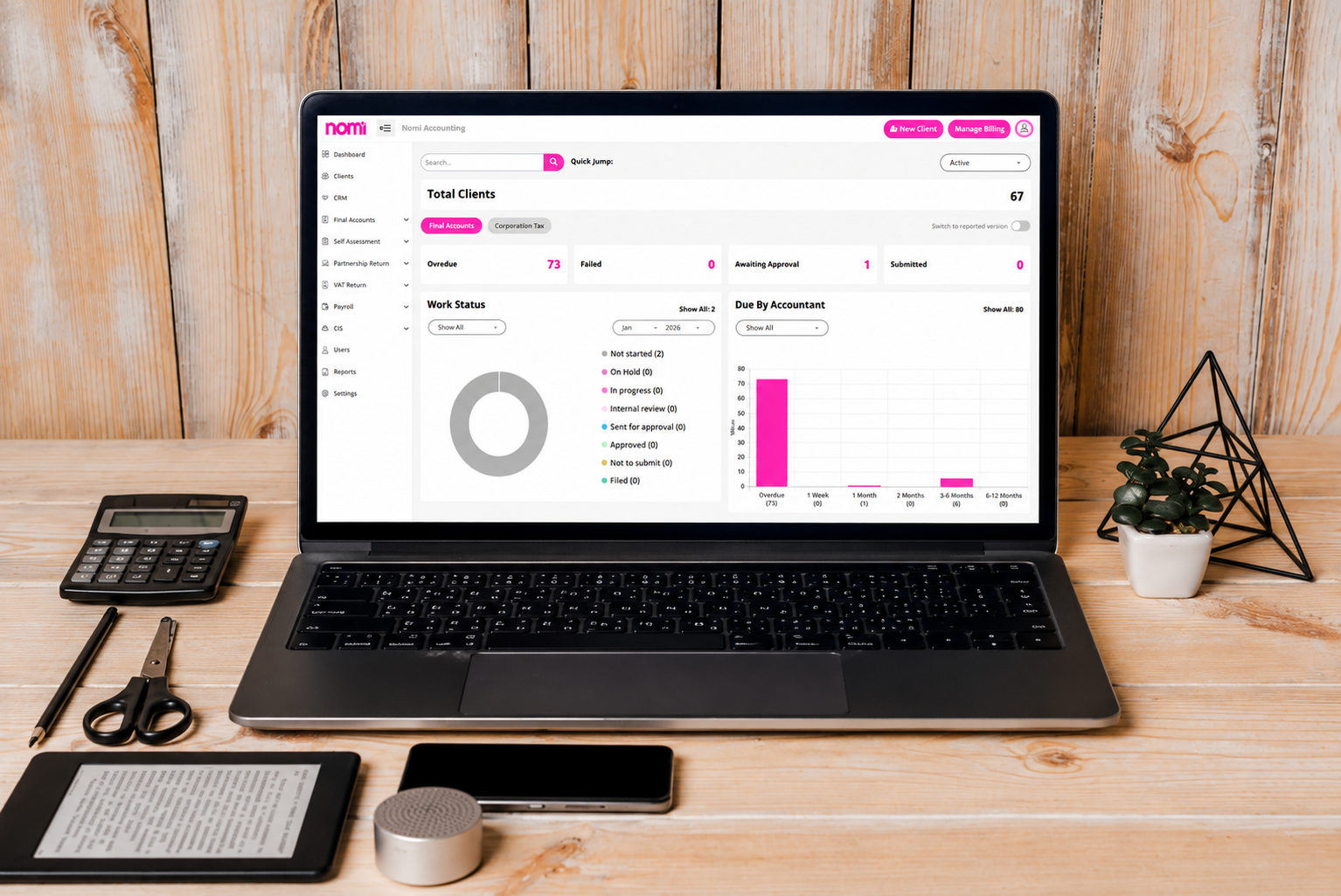
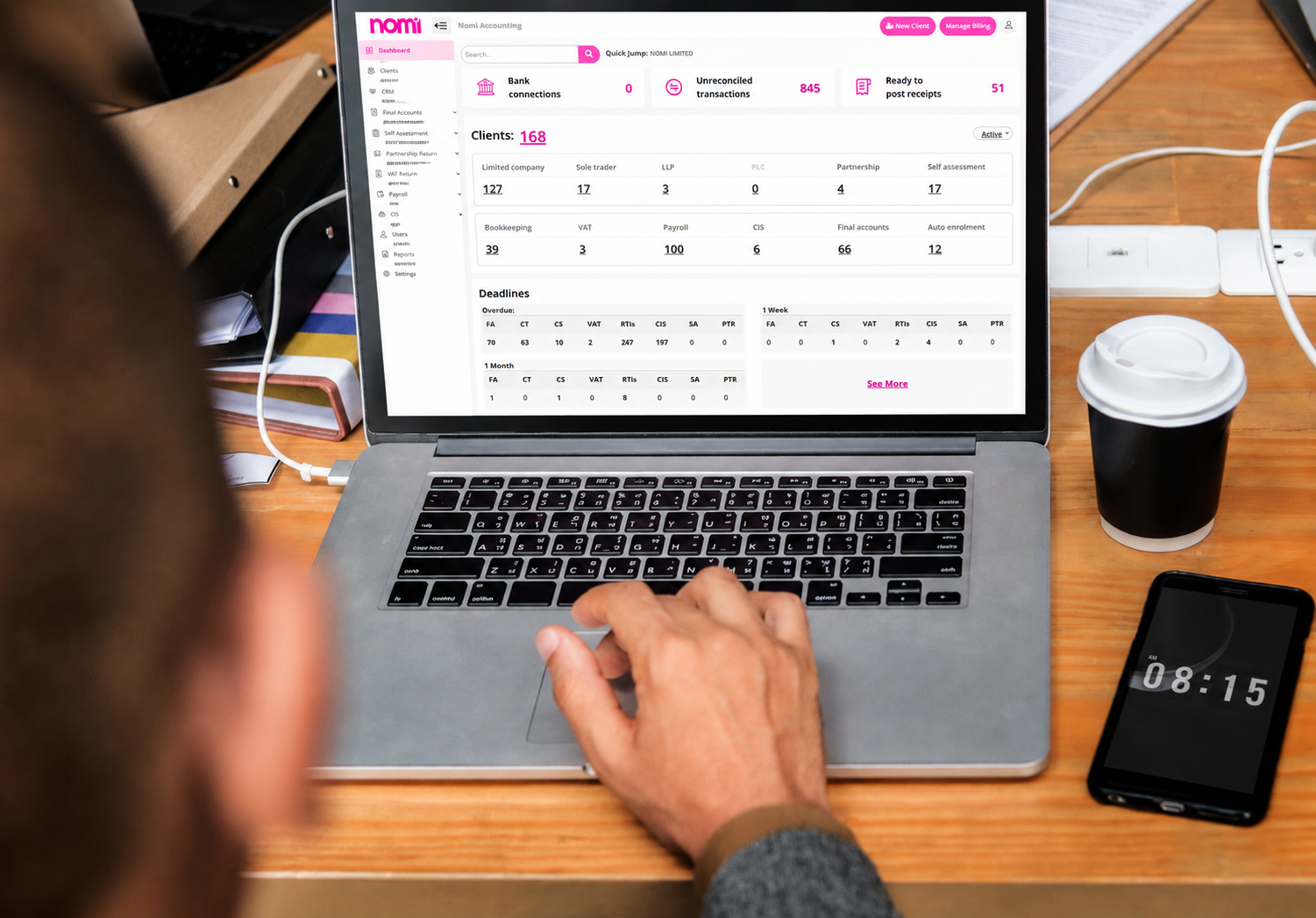
Nomi provides accountants and bookkeepers with powerful practice management software that simplifies your day-to-day work and allows you to stay compliant with current UK tax regulations. Nomi offers tools to manage clients, track due dates, and automate work so you can remain organised and maintain control.
Instead of worrying about tax changes, you can focus on growing your business while Nomi handles the complexity behind the scenes.
Disclaimer: All tax rates and changes mentioned in this blog are based on official UK government sources and publicly available information.
Frequently asked questions
- What are the main tax changes for 2026/27?
Ans: The main changes include higher dividend tax rates, new MTD requirements, changes to inheritance tax reliefs, a higher BADR rate and the end of employee homeworking tax relief.
- What are the tax band changes in 2026?
Ans: The main Income Tax bands for England, Wales and Northern Ireland remain unchanged, with the Personal Allowance at £12,570.
- Who needs to use Making Tax Digital from April 2026?
Ans: Sole traders and landlords generally need to use MTD if their qualifying income is more than £50,000, subject to the relevant rules and exemptions.
- Has Capital Gains Tax changed in 2026?
Ans: The main CGT rates remain 18% and 24%, while Business Asset Disposal Relief increases to 18% for qualifying disposals from 6 April 2026.
Want to find out more?
Book a free 30-day trial and see how our accounting software can help you manage staff, increase profitability and take your practice to the next level.

Month-end close checklist: How Automation cuts hours for UK SMEs
Month-end close can take days when finance teams have to chase invoices, enter transactions, reconcile...
Read More

How to Apply for VAT Exemption in the UK
To apply for VAT exemption in the UK, your business must meet HMRC’s conditions and...
Read More
What accountants should actually look for in practice management software
As an accounting practice grows, managing the work around accounting can become as challenging as...
Read More
Tax Practice Management Software: Features & Benefits
Practice management software helps accounting firms manage clients, tasks, deadlines, documents and daily workflows in...
Read More