How to go paperless in your accounting practice
 Team Nomi
6 minutes read

The accounting industry has changed significantly over the past few years. With cloud technology, digital tax requirements, and flexible working becoming the norm, more firms are moving away from paper-based processes. Going paperless not only reduces clutter but also improves efficiency, strengthens data security, and makes collaboration easier for both teams and clients.
How to go paperless in your accounting practice starts with replacing manual paperwork with digital tools and streamlined workflows. This shift enables firms to save time, reduce operational costs, and deliver a more efficient client experience.
This blog explains why go paperless, the key benefits of a digital accounting practice, and the practical steps to make your office paperless effectively.
Why go paperless?
Moving to a paperless accounting practice offers more than environmental benefits. It helps firms work smarter, improve productivity, and stay compliant with changing regulations.
Save time and improve efficiency
Searching through filing cabinets and paper records wastes valuable time. Digital documents can be organised, searched, and shared within seconds, allowing your team to focus on higher-value work instead of administration.
Reduce business costs
Printing, postage, storage, and office supplies all add ongoing expenses. A paperless office reduces these costs while freeing up valuable office space previously used for filing cabinets and archives.
Improve collaboration
Cloud-based systems allow accountants, bookkeepers, and clients to access documents securely from anywhere. This makes collaboration faster and supports hybrid and remote working without relying on physical paperwork.
Strengthen data security
Paper documents can be misplaced, damaged, or accessed by unauthorised individuals. Digital files can be protected with encryption, user permissions, multi-factor authentication, and automatic backups, giving greater protection for sensitive financial information.
Support regulatory compliance
Digital record keeping helps firms meet HMRC’s Making Tax Digital (MTD) requirements and simplifies record retention, audits, and compliance with UK data protection regulations.
Reduce environmental impact
Reducing paper consumption lowers waste and helps businesses minimise their environmental footprint while supporting sustainability goals that many clients value.
How to go paperless in your accounting practice
If you’re planning to go paperless, following a structured approach makes the transition much easier.
1. Review your existing paper processes
Start by identifying where paper is still being used across your practice. This may include:
-
- Client onboarding documents
- Engagement letters
- Purchase invoices
- Expense receipts
- Payroll records
- Tax documents
- Year-end accounts
Understanding your current processes helps identify opportunities for digitisation and automation.
2. Digitise existing documents
Scan important paper files and store them securely in digital formats. Using Optical Character Recognition (OCR) technology allows scanned documents to become searchable, making it easier to find information when needed.
Create consistent file naming conventions and folder structures so documents remain organised as your practice grows.
3. Use cloud accounting software
Cloud accounting software provides one secure location for managing financial records, client information, payroll, tax returns software, and compliance.
Instead of switching between multiple systems, your team can collaborate in real time while accessing up-to-date information from any location.
Cloud-based software also reduces the risk of losing important documents due to hardware failures or physical damage.
4. automate routine tasks
Automation reduces manual work and improves accuracy across your accounting processes.
Examples include:
-
- Automatic bank feeds
- Invoice processing
- Receipt capture
- Expense management
- Payroll calculations
- Client reminders
- Financial reporting
Automating repetitive tasks allows your team to spend more time providing advice and support to clients.
5. Introduce secure digital workflows
Replace paper approvals with digital alternatives wherever possible.
Consider using:
-
- Digital signatures
- Secure client portals
- Online document sharing
- Electronic engagement letters
- Digital approval workflows
These tools speed up document processing while reducing printing and postage costs.
6. Train your team
Technology delivers the best results when everyone follows consistent processes.
Provide training on:
-
- Document management
- File naming standards
- Security best practices
- Digital collaboration tools
- Data protection procedures
Clear internal processes help maintain consistency across the entire practice.
7. Encourage clients to go digital
A successful paperless practice depends on client participation.
Encourage clients to:
-
- Upload documents securely
- Send invoices electronically
- Approve documents online
- Use digital recordkeeping
- Communicate through secure portals
Providing simple guidance helps clients adopt digital processes with confidence.
Common challenges when going paperless
Although the benefits are significant, accounting firms may face a few challenges during the transition.
| Challenge | Solution |
| Staff resistance to change | Provide training and explain the long-term benefits. |
| Large volumes of paper records | Digitise documents gradually, starting with active client files. |
| Data security concerns | Use encrypted cloud storage, multi-factor authentication, and regular backups. |
| Software integration | Choose solutions that integrate with your existing accounting systems. |
| Client adoption | Offer simple instructions and encourage digital communication through secure portals. |
With proper planning, these challenges can be managed successfully without disrupting daily operations.
Paperless accounting checklist
Use this checklist to help your firm transition successfully.
-
- Review paper-based processes
- Scan and digitise existing documents
- Store files securely in the cloud
- Create consistent file naming conventions
- Introduce digital signatures
- Use secure client portals
- Automate repetitive accounting tasks
- Train staff on digital workflows
- Back up data regularly
- Review and improve your processes over time
Conclusion
Choosing how to go paperless in your accounting practice is about more than reducing paper. It creates a more efficient, secure, and collaborative way of working that benefits both your team and your clients.
By digitising records, automating routine tasks, using secure cloud technology, and encouraging digital collaboration, accounting firms can reduce administrative work, improve compliance, and deliver a better client experience.
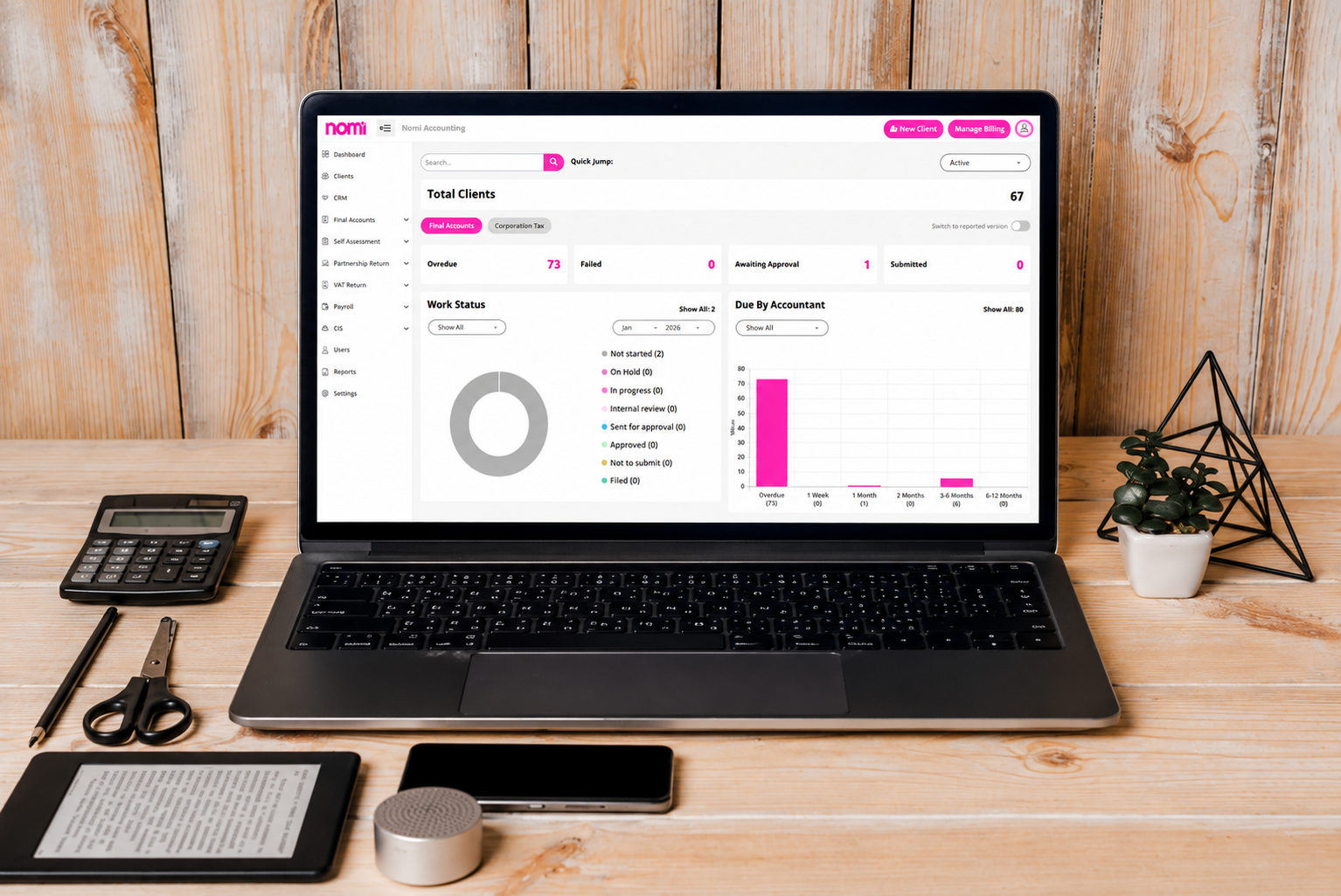
If you’re looking to make your office paperless, an all-in-one cloud accounting platform like Nomi can help you manage bookkeeping, payroll, tax, accounts production, practice management, and client collaboration from a single system. With everything in one place, your firm can work more efficiently while staying ready for the future of digital accounting.
Frequently Asked Questions
1. Why should accounting firms go paperless?
Ans. A paperless accounting practice improves efficiency, reduces operating costs, strengthens security, supports regulatory compliance, and provides a better experience for clients.
2. How do you make your office paperless?
Ans. Start by reviewing existing paper processes, digitising documents, introducing cloud accounting software, automating routine tasks, and replacing paper-based approvals with secure digital workflows.
3. Is digital document storage secure?
Ans. Yes. Modern cloud solutions use encryption, secure backups, access controls, and multi-factor authentication to help protect sensitive financial information.
4. Can small accounting firms go paperless?
Ans. Absolutely. Small practices often benefit the most because digital processes reduce administration, improve productivity, and allow firms to grow without increasing paperwork.
5. Does going paperless support Making Tax Digital (MTD)?
Ans. Yes. Maintaining digital financial records helps accounting firms comply with HMRC’s Making Tax Digital requirements while making tax preparation and reporting more efficient.
Want to find out more?
Book a free 30-day trial and see how our accounting software can help you manage staff, increase profitability and take your practice to the next level.

Quarterly business review template for accountants and their clients
A quarterly business review (QBR) helps accountants and clients review financial performance, assess business goals...
Read More

Month-end close checklist: How Automation cuts hours for UK SMEs
Month-end close can take days when finance teams have to chase invoices, enter transactions, reconcile...
Read More

How to Apply for VAT Exemption in the UK
To apply for VAT exemption in the UK, your business must meet HMRC’s conditions and...
Read More
What accountants should actually look for in practice management software
As an accounting practice grows, managing the work around accounting can become as challenging as...
Read More