
How to Apply for VAT Exemption in the UK
 Team Nomi
7 minutes read
To apply for VAT exemption in the UK, your business must meet HMRC’s conditions and provide the required information.
Businesses that make mainly zero-rated supplies may qualify for an exception from VAT registration. This can mean you do not need to register for VAT even if your taxable turnover reaches the registration threshold.
However, VAT exemption and an exception from VAT registration are not the same thing. They follow different rules and apply in different situations. Before applying, check which rules apply to your business and whether your supplies qualify.
What is VAT Exemption?
VAT exemption means a business does not have to register for VAT or charge VAT on its sales because it meets specific HMRC conditions.
However, VAT exemption can have different meanings depending on the situation. For example, VAT-exempt supplies and exemption from VAT registration are not the same.
-
- VAT-exempt supplies: Certain goods and services do not attract VAT, such as some financial, insurance and education services.
- Exemption from VAT registration: HMRC may allow a business to remain unregistered if its supplies meet specific zero-rating conditions.
- Exception from VAT registration: HMRC may allow a business to avoid registration if it temporarily exceeds the VAT threshold but expects its taxable turnover to fall below the deregistration threshold within the next 12 months.
What conditions qualify for VAT Relief?
Before applying, you should understand what conditions qualify for VAT relief under UK VAT rules.
HMRC allows businesses to apply for exemption from VAT registration if their taxable supplies are all or mainly zero-rated.
Zero-rated supplies are taxable supplies charged at 0% VAT. Although businesses do not charge VAT on these sales, they can normally reclaim VAT on eligible business purchases if they are VAT registered.
Conditions for VAT registration exemption
Your business may qualify if:
| Condition | Explanation |
| All supplies are zero-rated | Your business makes only goods or services that attract 0% VAT. |
| Mainly zero-rated supplies | Most of your taxable supplies are zero-rated. |
| Overall repayment position | If you make both zero-rated and standard or reduced-rated supplies, you may need to demonstrate that your business expects to be in an overall VAT repayment position over the next 12 months. |
| HMRC approval | You must apply to HMRC and receive approval before treating your business as exempt from registration. |
HMRC considers your business activities and supporting information before making a decision.
Important: VAT-exempt supplies do not automatically qualify your business for exemption from VAT registration. The rules mainly concern zero-rated taxable supplies.
Read the official guidance in VAT Notice 700/1.
How to apply for VAT Exemption
Businesses can apply for VAT registration exemption through HMRC’s online VAT registration service or by post.
Follow these steps to understand how to apply for VAT exemption.
Step 1: Check your VAT Registration requirements
Before applying, check whether your business must register for VAT.
You generally need to register if:
-
- Your taxable turnover exceeds £90,000 over the previous 12 months.
- You expect your taxable turnover to exceed £90,000 in the next 30 days.
However, if your business makes all or mainly zero-rated supplies, you may qualify for exemption from registration.
Check your business turnover and the VAT rates applicable to your supplies before starting the application.
Step 2: Gather the required business information
Prepare the information HMRC needs to assess your application.
This may include:
-
- Business name and address
- Business registration details, where applicable
- VAT registration details, if already registered or applying for registration
- Details of your taxable turnover
- Information about the goods and services you supply
- Breakdown of zero-rated, standard-rated and reduced-rated supplies
- Estimated taxable turnover for the next 12 months
- Supporting evidence showing your expected VAT position
If your business makes different types of supplies, keep clear records of their values and applicable VAT rates.
Step 3: Apply through HMRC’s online service
You can apply for exemption from VAT registration through HMRC’s online VAT registration service.
You will need to:
- Visit the GOV.UK VAT registration service.
- Sign in using your Government Gateway account.
- Start your VAT registration application.
- Provide the required business and turnover information.
- Select the option to apply for exemption from registration, where applicable.
- Submit the relevant details and supporting information.
Provide accurate information about your business activities and expected turnover.
Step 4: Apply by post using form VAT1
If you prefer to apply by post, you can request form VAT1 from HMRC.
Contact HMRC and explain that you want to apply for exemption from VAT registration.
Complete the relevant sections of the form and provide supporting information about your business.
If you make zero-rated supplies alongside standard-rated or reduced-rated supplies, explain why you expect your business to remain in an overall VAT repayment position over the next 12 months.
You can refer to HMRC’s guidance on registering for VAT by post.
Step 5: Wait for HMRC’s decision
After receiving your application, HMRC will review the information and decide whether your business qualifies.
HMRC will contact you to confirm its decision.
If HMRC approves your application, you can remain unregistered for VAT while you continue to meet the conditions.
If HMRC rejects your application, you may need to register for VAT from the date you became liable to register.
What happens after HMRC approves your VAT exemption?
Once HMRC approves your application, your business can remain unregistered for VAT.
However, you must continue to monitor your business activities and keep accurate financial records.
Here are some important points to remember:
-
- You cannot charge VAT: You must not add VAT to your sales invoices while you remain unregistered.
- You cannot reclaim VAT: You generally cannot recover VAT paid on business purchases and expenses.
- Monitor your supplies: Check whether your business activities continue to meet the exemption conditions.
- Inform HMRC about changes: Notify HMRC if there is a material change like your supplies.
- Review your registration position: You may need to register if your circumstances change.
For example, if your business starts making significant standard-rated supplies, your eligibility for exemption may change.
You should review your VAT position regularly to avoid unexpected registration liabilities.
Manage Your VAT Records with Nomi
Managing VAT responsibilities requires accurate records, regular checks and proper bookkeeping. Whether your clients are VAT-registered or qualify for an exemption, keeping their financial information organised can make accounting work easier.
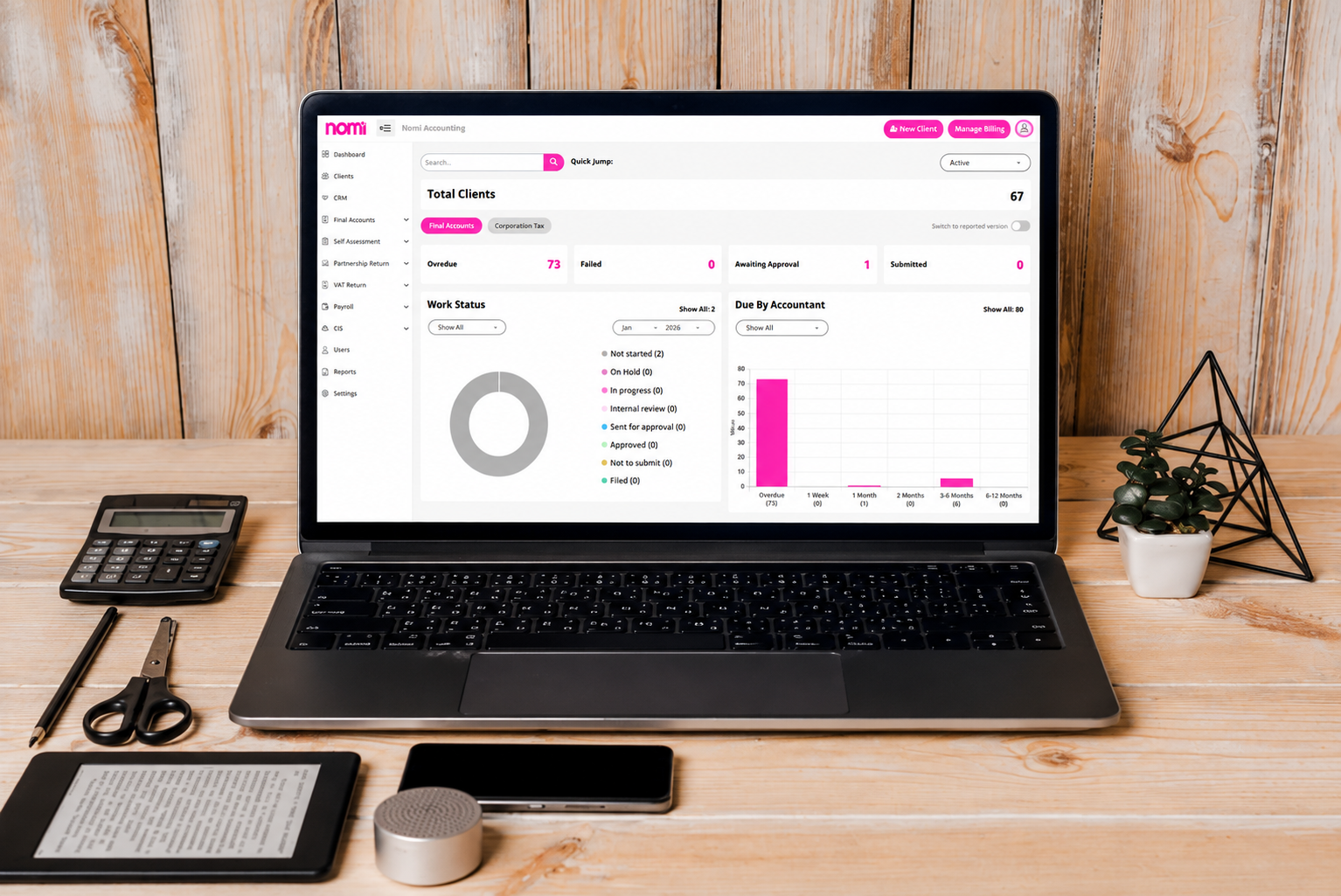
Nomi is cloud-based accounting software designed for UK accountants and bookkeepers. It brings bookkeeping, tax and practice management into one platform, helping accounting practices manage client records and day-to-day accounting tasks.
With Nomi, you can:
-
- Manage bookkeeping records for multiple clients.
- Keep financial information organised.
- Manage client accounts from one platform.
- Access accounting information online.
- Handle bookkeeping and tax tasks in one place.
Conclusion
Understanding how to apply for VAT exemption can help businesses manage their VAT responsibilities correctly.
In the UK, businesses making all or mainly zero-rated supplies may qualify for exemption from VAT registration, subject to HMRC approval. Before applying, check your business activities, turnover and eligibility conditions.
Make sure you submit accurate information and supporting evidence to avoid delays or rejection. Remember that VAT exemption is different from an exception from registration, and each has separate eligibility requirements.
Frequently asked questions
- Can I apply for VAT exemption online in the UK?
Ans: Yes. You can apply for exemption from VAT registration through HMRC’s online VAT registration service or request form VAT1 by post.
- Who qualifies for VAT exemption in the UK?
Ans: Businesses making all or mainly zero-rated taxable supplies may qualify. HMRC must approve the application before the business remains unregistered.
- Can I claim VAT back if my business is VAT-exempt?
Ans: Businesses exempt from VAT registration generally cannot reclaim VAT paid on business purchases and expenses.
- How long does HMRC take to approve VAT exemption?
Ans: HMRC reviews applications and sends its decision by letter. Processing times may vary depending on the application and supporting information.
- Can HMRC reject my VAT exemption application?
Ans: Yes. HMRC may reject your application if your business does not meet the eligibility conditions or provide sufficient supporting information.
Want to find out more?
Book a free 30-day trial and see how our accounting software can help you manage staff, increase profitability and take your practice to the next level.
What accountants should actually look for in practice management software
As an accounting practice grows, managing the work around accounting can become as challenging as...
Read More
How AML software helps accountants in accounting practices
Anti-money laundering (AML) checks are an important part of running an accounting practice in the...
Read More

Making Tax Digital for Accountants: A Practical Guide for 2026/27
Making Tax Digital (MTD) for Income Tax is now live. Since 6 April 2026, sole...
Read More